
Leading with the Story You Survived
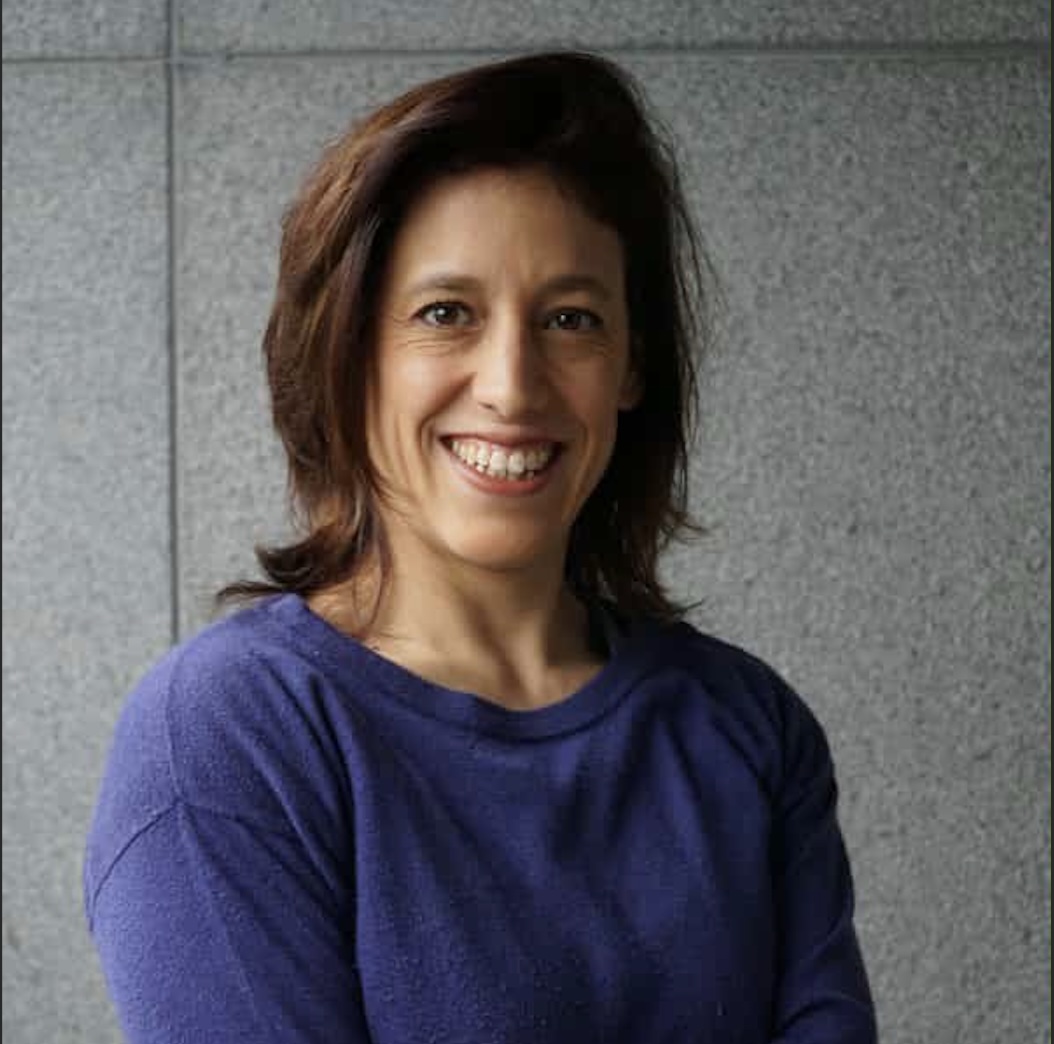
Kim Eunju’s journey from the frozen Tumen River to the world’s stages, and her mission to teach young North Koreans to dream
Living in South Korea means constantly coming face to face with North Korea. A war that is not quite a war. An invisible tension that is never quite felt. A weight of history and memory that is slowly fading as the generation of witnesses passes away.
And yet, we know next to nothing about North Korea.
In the cozy and welcoming coffee shop at KOTE, where freedom is a must, The Gallery had the great honour to welcome Kim Eunju on 15 October: North Korean defector, activist, and a woman of great, quiet energy. In a city that talks about North Korea as much as it wants to forget it, one quiet voice made us listen.
Hearing her testimony was a precious privilege, an enrichment of both knowledge and humanity that left us with a new and different awareness. As the morning went on, we also realised that we were listening to a lesson in leadership: not the kind that comes with a title or a team, but the kind that comes from a life told so openly that it becomes an example for others.
Eunju fled North Korea twice. But the first time, she was driven by the urgency: hunger. She lived through the mid-1990s, when a devastating famine struck the country and decimated its population. This was the so-called Arduous March, which by some estimates claimed as many as three million lives. For Eunju it was a time of “firsts”: the first public execution, the first death in the family, the first feeling of abandonment, of death, of the end. She even wrote her first farewell letter, drained of all will to live and convinced she would never see her mother again.
To save her daughters, her mother pushed them to cross the frozen Tumen River on a night in February 1999. In China, the three of them immediately fell into the trap of human trafficking: her mother was sold to a Chinese man for 2,000 yuan, the same fate that befell an estimated 60% of North Korean women in that situation. For several years they remained trapped, working without rest, until her mother gave birth to the son the man had expected. “We tried to escape, but the man asked us back the 2.000 yuan he had spent to buy my mother”.
Barely a year after his birth, the police found them and sent them back to North Korea. There, however, they no longer appeared in any register: their absence had turned them into the walking dead no one in North Korea wanted anymore. And that invisibility gave them a new chance to escape the nightmare in 2002. It was the start of the long road that, through China and finally Mongolia, would bring Eunju to South Korea, where she began to rebuild a new version of her life. “When we decided to go to South Korea it was for freedom”.
But what ambitions can you have when all your life you have only thought about survival? When no one has ever taught you to dream?
This is the resilience of a young woman who had to learn to live again, to find joy in life, and above all to rebuild an identity without disowning her past. Eunju found her way, first through a chance encounter with the writer Sébastien Falletti, who gathered her story and helped her turn it into a book, A Thousand Miles to Freedom: My Escape from North Korea.
“The reason why he chose me was because he thought I was ready to speak”.
From that book, and from her own journey, came a realisation: her past is someone else’s present. She could not leave her story behind. She had to keep telling it, turning it into testimony, and then into activism.
Today Eunju has stood at the podiums of Harvard, Oxford, Yale and the United Nations, offering her story, her example and her experience as a vital tool for drawing attention to the reality of the North Korean people. Her focus is on nurturing civil society: inside the borders of the forbidden country, with forbidden content smuggled in, so that her compatriots learn what rights are and begin to aspire to something different. First the emotions, then the awareness. It is a communicator’s instinct: people rarely change because they are told what to think, but because something moves them first. And furthermore, beyond the borders, so that the world does not stop caring about the cause.
The country is going through a critical moment. After COVID, the current South Korean government’s policy of putting peace first in relations with the other half of the peninsula has led to a halt in funding for NGOs, and defections have fallen sharply from their peak. But education and knowledge cannot be interrupted. After years working with Hanvoice, Eunju is now laying the foundations of a new organisation dedicated to young people: Catalyst. From there she wants to keep planting the seed of knowledge in the lives of young North Koreans, and to encourage exchange not only with a South Korean audience, their “siblings” and “neighbours”, but also with the international community.
The open, honest conversation Eunju gave us let us lift the fog, if only for a moment, from this unknown and misunderstood country. Above all, it reminded us that behind the name “North Korea”, behind a despotic and inhumane regime, and behind a distorted idea, there is a people who endure continuous abuse. A people deprived of the most basic civil rights, who break their backs to survive and to prop up one of the most secretive and protected systems of inequality and injustice in the world.
Eunju’s leadership is not about commanding. It is about refusing to let her story end with her, and inviting us to carry it further.
Knowledge is, ultimately, the first mean against its permanence.
Please consider supporting Catalyst as a funding member. Scan QR and follow their journey:


Comments